
 Before
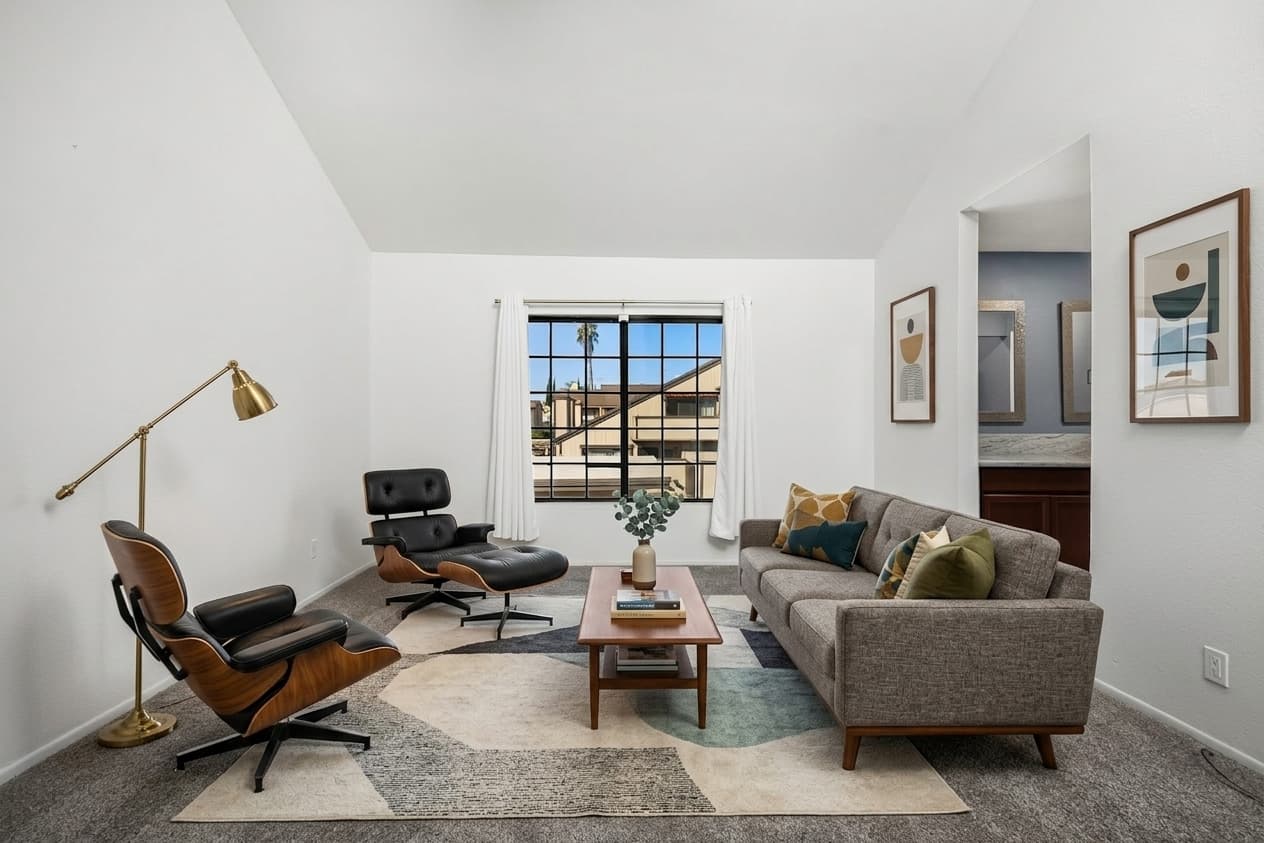 After
AfterWhat defines mid-century modern staging
Mid-century modern staging centers on furniture silhouette as much as color: tapered, angled wooden legs (usually walnut or teak-toned), gently curved backs, and low, horizontal forms. This is the one style where a single iconic piece — a lounge chair, a credenza, a starburst mirror — can define the whole room's credibility.
The palette is warm wood plus a restrained set of saturated accent colors: mustard, teal, burnt orange, avocado, used sparingly on pillows or a single upholstered piece rather than throughout. Geometric-pattern rugs (not floral, not solid) are a signature detail.
This style has a real architectural home: it was designed for the low-slung, open-plan ranches and split-levels actually built in that era, with their exposed beams, brick fireplaces, and large sliding-glass doors. Staged into a Victorian or a 2020s builder-grade townhome, it reads as costume rather than character.
Which listings it suits
- Genuine 1950s-70s ranch, split-level, or A-frame homes — the furniture style matches architecture the buyer is already touring in person.
- Urban mid-century condo conversions and lofts in markets like Palm Springs, parts of LA, Denver, and the Pacific Northwest where mid-century inventory is a recognized, sought-after category.
- Listings where the agent wants to lean into the home's period character as a selling point rather than disguise it — buyers specifically shopping for mid-century homes tend to respond well to staging that confirms it.
Avoid it on homes with no period-appropriate bones — a 1990s colonial or a brand-new build staged in mid-century furniture looks like a themed rental, not a lifestyle buyers can picture living. It also reads oddly formal for very casual, low-key rooms; the style photographs better in living and dining spaces than in small secondary bedrooms.
What to check in an AI render of mid-century modern style
Not every AI staging render nails a style consistently. Here's what to look for specifically when judging a mid-century modern render before you publish it to the MLS:
Generic "retro" furniture instead of the real silhouette
The biggest tell is a render that uses grey modern furniture with a mustard pillow thrown on top and calls it mid-century. Check specifically for tapered legs and warm wood tones — without those two things, it's not actually the style, just a color palette.
Accent colors overused
Mid-century staging uses mustard and teal as accents, not as the dominant palette. If half the furniture in the render is mustard-colored, that's over-application — real mid-century rooms are wood- and neutral-dominant with color used sparingly.
Rug pattern mismatch
Watch for floral or damask rugs slipping into an otherwise mid-century render — those belong to traditional staging. The rug should be geometric or a simple abstract pattern; a wrong rug is one of the fastest ways this style reads as inconsistent.
Try Mid-Century Modern staging on your own listing
Upload a listing photo — Mid-Century Modern is preselected, and the free tier gives you 6 watermarked renders a day, no signup required.
Try this Mid-Century Modern lookFrequently asked questions
- Does mid-century modern staging work on any home, or only period homes?
- It works best on homes actually built in the 1950s-70s, or on condo conversions in markets known for mid-century inventory. On architecturally unrelated homes it tends to look like a themed rental rather than a natural fit.
- What price range does mid-century staging suit?
- It's not price-band-specific the way luxury staging is — mid-century ranches sell anywhere from starter-home pricing to high-end architect-designed properties. The determining factor is the architecture, not the price point.
- Which rooms photograph best in mid-century style?
- Living rooms and dining rooms show it off best, since the iconic furniture pieces (lounge chairs, credenzas, dining sets) are the visual signature. Bedrooms and home offices can work too, but the style is less recognizable without a statement piece.
- How do I check an AI mid-century render for accuracy?
- Look for tapered wooden legs on seating and tables, walnut or teak tones (not painted white or black wood), and a geometric — not floral — rug. If those three details aren't present, the render is using a generic retro look rather than accurate mid-century design language.