
 Before
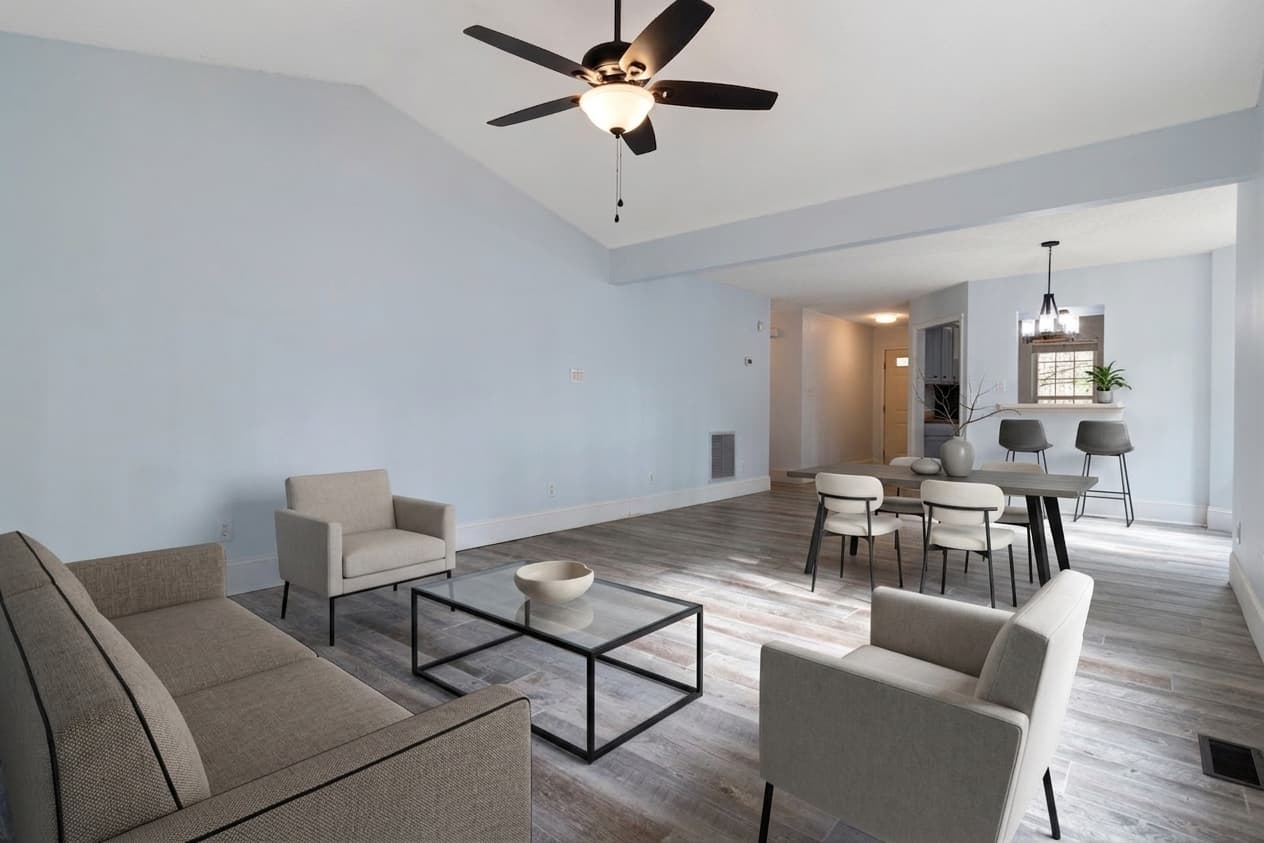 After
AfterWhat defines modern staging
Modern staging is defined by restraint: clean-lined furniture with minimal ornamentation, a low-profile sofa (arm height typically at or below the seat back), and surfaces in matte metal, glass, or unadorned wood. The palette stays tight — warm greys, off-white, black accents — with color introduced through one or two deliberate accent pieces rather than patterned textiles.
Negative space is part of the style, not a gap to fill. A modern-staged room should look less furnished than a traditional one, with each piece doing visible work (a single sculptural chair instead of a cluttered reading nook). Rugs are usually solid or subtle geometric, never busy florals or ornate medallions.
The style pairs naturally with rooms that already have modern bones: exposed structural elements, large windows, flat-panel cabinetry, or an open floor plan. It clashes visually with crown molding, wainscoting, or arched doorways — the furniture and architecture start fighting each other instead of working together.
Which listings it suits
- New construction and homes built or fully renovated in the last 10-15 years, where the architecture already reads clean and unornamented.
- Urban condos and townhomes, especially in markets where buyers are shopping move-in-ready over character homes.
- Listings in the $300K-$800K range where buyers are comparing several similarly-priced properties and want to picture a low-maintenance, uncluttered lifestyle rather than a design statement.
Skip modern staging on pre-1980s homes with visible traditional trim, ornate fireplace surrounds, or heavy crown molding — the furniture will look like it was dropped into the wrong house. It also underperforms on warmer, more traditionally-furnished suburban listings, where a lived-in look photographs better than a minimal one.
What to check in an AI render of modern style
Not every AI staging render nails a style consistently. Here's what to look for specifically when judging a modern render before you publish it to the MLS:
Furniture that's too heavy for the "low-profile" claim
A common AI miss is generating a sofa with a high back and thick arms and calling it modern just because the fabric is grey. Check the actual silhouette — modern furniture should sit low and look structurally light, not just neutral-colored.
Clutter creeping into a style built on restraint
Because modern staging relies on negative space, any AI tendency to over-decorate (extra throw pillows, stacked books, multiple wall pieces) undermines the whole look faster here than in busier styles. If the render feels "full," it's not reading as modern correctly.
Mismatched metal tones
Modern staging leans on matte black or brushed metal accents. Watch for renders that mix warm brass with cool chrome in the same shot — a small detail that reads as a furniture-catalog collage rather than a single considered room.
Try Modern staging on your own listing
Upload a listing photo — Modern is preselected, and the free tier gives you 6 watermarked renders a day, no signup required.
Try this Modern lookFrequently asked questions
- Is modern virtual staging good for older homes?
- Not usually. Modern staging looks best against equally modern architecture. If the home has crown molding, arched doorways, or traditional trim, the clean-lined furniture will visually clash with the bones of the room — traditional or transitional staging reads more naturally there.
- What kind of listing does modern staging suit best?
- Urban condos, new-construction townhomes, and low-maintenance move-in-ready homes with clean architectural lines tend to suit modern staging best — the style is built around simplicity and negative space, which reads most naturally against equally uncluttered architecture.
- Does modern staging work in every room type?
- It reads most convincingly in living rooms, home offices, and primary bedrooms. In kitchens and bathrooms, StageMLS only adds light decor around fixed architecture — the countertops, cabinets, and appliances stay untouched, so the "modern" look there comes through in styling accents, not furniture.
- How does modern staging differ from Scandinavian?
- Both are minimal, but modern leans cooler and more industrial — black metal, glass, matte surfaces — while Scandinavian is warmer and wood-forward, with pale oak and knit textiles. If the listing has warm wood tones already, Scandinavian usually blends in better.