
 Before
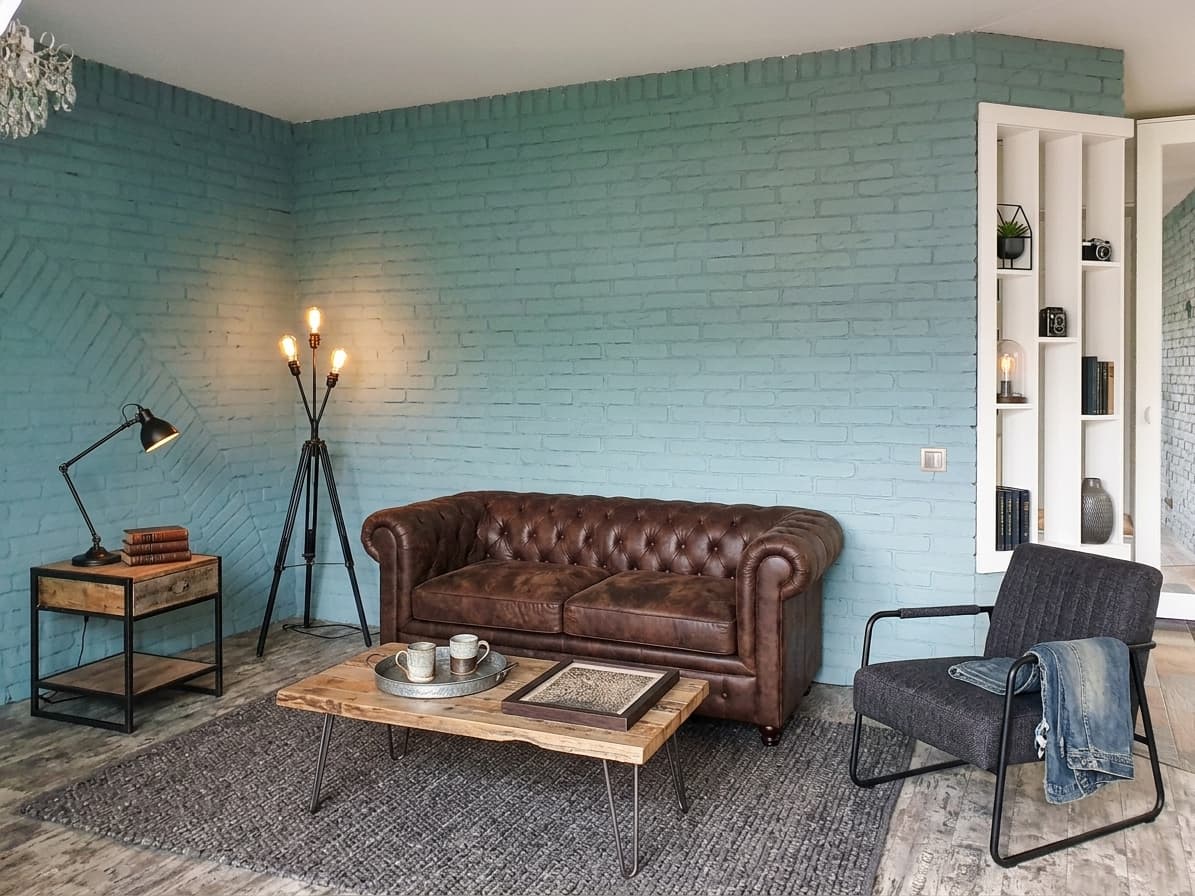 After
AfterWhat defines industrial staging
Industrial staging pairs leather or dark-fabric seating with black metal furniture frames and raw or reclaimed wood surfaces — the material palette deliberately shows some texture and wear rather than a polished, refined finish. Edison-bulb or exposed-filament lighting is a signature detail, often as a floor lamp or pendant.
The overall palette runs deep and neutral: charcoal, black, dark brown, with almost no soft pastel or light color introduced. It's a deliberately rugged, urban-loft aesthetic, more tolerant of visual "roughness" (raw edges, visible hardware) than any other style in this list.
This style has the most specific architectural dependency of all eight: it's designed to complement exposed brick, visible ductwork, concrete floors, or high ceilings with steel beams — features found in converted warehouses and purpose-built lofts, not standard drywall-and-carpet suburban construction.
Which listings it suits
- Genuine loft and converted-warehouse units with exposed brick, ductwork, or concrete floors already visible in the room — the staging matches architecture that's actually there.
- Urban markets with a recognized loft-conversion inventory (parts of Chicago, Brooklyn, downtown LA, Denver's RiNo, etc.), where buyers are specifically searching for that aesthetic.
- Listings in the $300K-$900K urban range where a distinct, non-generic look tends to photograph better than a broadly neutral one.
Avoid it on standard drywall suburban homes with carpet, painted walls, and no exposed structural elements — without the architecture to back it up, industrial staging looks like a themed rental rather than a natural extension of the space, and the dark, texture-forward palette can read as cold rather than inviting.
What to check in an AI render of industrial style
Not every AI staging render nails a style consistently. Here's what to look for specifically when judging a industrial render before you publish it to the MLS:
Industrial furniture staged against architecture that contradicts it
Because this style depends so heavily on the room already having exposed brick, ductwork, or concrete, the first thing to check isn't the furniture — it's whether the underlying photo actually supports the style. If it's a carpeted, drywall suburban room, no furniture choice fixes that mismatch.
Metal frames rendered too polished
Industrial black metal should look slightly matte and utilitarian, not high-shine and boutique. A render with glossy chrome-black furniture is drifting toward a more modern-luxury look rather than genuine industrial — check the finish, not just the color.
Missing the lighting signature
Edison-bulb or exposed-filament lighting is one of the most recognizable industrial cues. If a render uses generic modern lighting instead, the room can end up reading as dark-modern rather than distinctly industrial — worth checking as its own detail separate from the furniture.
Try Industrial staging on your own listing
Upload a listing photo — Industrial is preselected, and the free tier gives you 6 watermarked renders a day, no signup required.
Try this Industrial lookFrequently asked questions
- Does industrial staging work in a regular suburban house?
- Not well. Industrial staging depends on the room already having exposed brick, ductwork, concrete, or steel beams. Without that architecture, the furniture looks like a themed choice rather than a natural fit — a more neutral style like modern or Scandinavian usually works better.
- Is industrial staging too cold-looking for a warm, welcoming feel?
- It can read that way — the deep, dark, texture-forward palette leans toward a distinct, design-conscious urban look rather than warmth. On listings where a warmer, more inviting feel is the priority, farmhouse or traditional staging is usually the safer fit.
- What markets does industrial staging suit best?
- Industrial staging suits best in markets with a recognized loft-conversion inventory — Chicago, Brooklyn, downtown LA, Denver's RiNo district, and similar warehouse-district markets — where buyers are specifically searching for that industrial aesthetic.
- How is industrial different from modern staging?
- Modern is light, neutral, and minimal; industrial is dark, textured, and deliberately a little rough (raw wood, visible metal hardware, Edison bulbs). Industrial also depends on real architectural cues (brick, ductwork) that modern doesn't require.